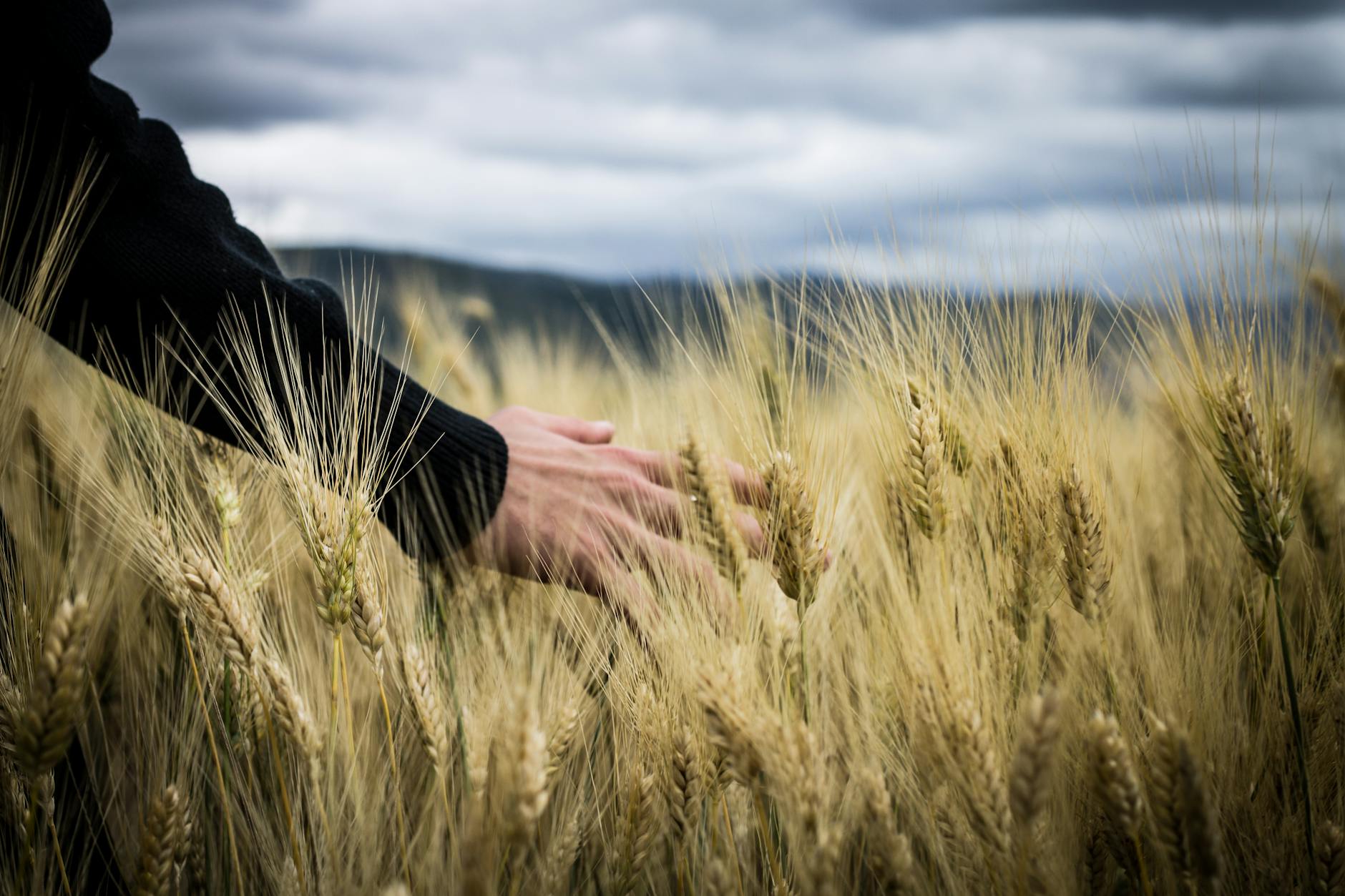
Then There Was None
The Bible states that God the Creator and overseer of this
universe, does not change (Mal. 3: 6). Whatever he declares, he will
do. Whatever he promises, will come to pass (Mark 11: 24). This is
just his nature and we, his creation, are often ignorant and incapable to
understand his nature, discern what is good and evil, and rationalize
acceptable responses to countless decisions that are made in our
lives daily. This aimless and rebellious nature contrary to God’s
nature is the primary reason that many of creation are racing at a
breakneck speed down the broad highway with the wide gateway
leading creation the wrong way (1Cor. 15: 22).
In a look back at the Garden of Eden, God as always, would be
aware of his creation’s behavior, and they would be disobedient to
him due to their inner nature. Characteristics of this nature would
yield results affected by their gullibility to others, willingness to be
easily manipulated in different settings, and often accept claims of
truth in situations without sufficient evidence. This may have been
one of many reasons that God, through his Word, refers to his
creation as being like unto sheep (Psa. 100: 3) (Isa. 53: 6-7) (Ezek.
34: 31).
In the Old Testament as Moses executed his call to lead Israelites
out of Egypt, he referred to the people as being disobedient,
stubborn, stiffed-necked, and rebellious (Deut. 9: 6-7) (Ex. 32: 9). He
added that they may go outward and come back inward at their
choosing adding that the people’s behavior is likened unto a flock or
fold of sheep with no shepherd (Num. 27: 15-17).
Sheep are a most unique animal exhibiting some unusual
characteristics at times. They exhibit a timid nature and are known
for huddling together. They possess almost 360 degree peripheral
vision and are easily startled, preferring to run uphill or gather in tight
groups to feel safe when excited. They instinctively follow a leader or
one another in times of order or in chaos. They are followers and not
leaders.
After his resurrection, Jesus appears unto seven of his disciples
at the Sea of Galilee as they were fishing. They had been fishing all
night and caught nothing. Let’s look at that again. Nearly
professional fishermen fished all night and caught nothing.
With the Lord’s help, their nets almost broke with a catch.
After recognizing the Lord standing on the shore, the disciples come
to shore where the Lord is waiting dragging their nets full of fish.
Jesus has a fire with bread and fish ready to serve. After serving the
disciples, Jesus turns to Peter and asks him if he loves the Lord?
Peter answers that he did. The Lord answered, “Feed my sheep”.
Again, the Lord asks Peter if he loves the Lord. Peter again
answered that he did so. Jesus said for Peter to then go and feed my
lambs. Jesus asks Peter a third time if Peter loves him. Peter, a bit
irritated, answers more robustly, “Lord, you know all things; you
know that I love you”. Jesus tells Peter to again feed his sheep.
Christ as the good Shepherd is the utmost protector and caretaker
of his creation flock. He provides the green pastures, leads the flock
beside nonthreatening still waters, and promises to never leave them
alone to be fearful (Psa. 23) (Matt. 28: 20). His great love for his flock
is apparent as he would lay down his life for them (Rom. 5: 8). Even
if one of the sheep goes astray, he will leave the remaining flock and
go rescue the missing lamb or sheep (Luke 15: 4-7). How much
better care and guarantee of safety could be offered than this? The
most important conclusion in this comparison of the shepherd’s care
of the sheep and our Good Shepherd’s care for Christian’ believers is
the same.
Where in God’s Plan for his creation is there a flaw that allows for
creation’s failure to live the glorious life here with God’s promises of
protection, unspeakable joy and peace, and blessings from the
Windows of Heaven that are overflowing (Mal. 3: 10)? Maybe the
flaw is not in the Plan or the Planner? Maybe the fault lays in
“following the Plan”?
Again, God does not change and guarantees all his promises.
God’s creation on the other hand, as a whole seems to keep their
promises to rebel and seek through their own wisdom; unfortunately,
this is opposite of what God requires of them to be obedient and
consequently recipients of his outpouring of blessings.
Approximately 3472 years ago, after 435 years of being in
captivity in Egypt, Moses was sent by God to lead his disobedient
children out of Egypt into a “land flowing of milk and honey” (Ex. 3: 8).
After several adjustments to the Exodus’ itinerary, roughly 2,000,000
men, women, and children established camp at Mount Sinai
somewhere in Egypt or Saudi Arabia. How would this enormous
number of “mouths to feed” and “clothing to wear” be accomplished?
For God, no problem!
The Bible states that with the morning’s dew, a substance called
“manna” was left after the morning dew dried on the ground. It was
white as frost and resembled coriander seed in size and looked like
crystal. It was described in writings as tasting like wafers baked with
honey or cakes with oil. This would be their food source for 40 years
due to their disobedience (Ex. 16: 35). The Word of God also says
that their clothing did not wear out nor their feet swelled or changed
sizes during the time in the wilderness (Deut. 8: 4) (Neh. 9: 21).
God had proven unconditionally, time and time again that he was
faithful in delivering his promises if the people would only be obedient
and keep theirs. Each morning except on the Sabbath, the people
were to go and gather the “manna from heaven” for the day’s food
supply. The day before the Sabbath the people were to gather twice
as much, for there would be no manna there on the Sabbath.
However, true to the nature passed through the lineage of Adam
and Eve, many people would go outside the camp and look for
manna. They were being defiant directly to God’s face and every
time they sought manna on the Sabbath, then there was none!
The people of Israel, mostly through false teachers and prophets who
devised numerous laws and rules to control the people through the
past 3000 years plus, have suffered exile and destruction of their
religious centers including the magnificent Temple that Solomon built.
They have been persecuted and ostracized openly and privately
throughout the world. How many times being in perils seemingly
without hope does it take before the people learn to trust God.
Until any people acknowledge God openly and realize that their existence
is determined by obedience to God, they will continue “looking for love
in all the wrong places” and realize in empty places are only empty
promises with empty lives (singer, Johnny Lee, 2019) (Psa. 39: 5-6).
 Sower's Field by L. Michael Schoonover