Sometime between 1300 B.C. and 1060 B.C.
Review the story of Naomi in the Book of Ruth
Calamity Strikes Bethlehem
A drought and famine struck Bethlehem, which was home. Elimelech, a long time resident of Bethlehem was forced to take his wife, Naomi and two sons, Mahlon and Chilion on a long journey southward to the land of Moab to survive. Traveling down the region alongside the Jordan River was a distance of 50 miles or longer. The journey would take roughly 7 to 10 days to walk there. What was expected to be a short stay in Moab turned into ten years. While there, Elimelech, Naomi’s husband and two sons, Mahlon and Chilion died leaving Naomi with two daughters-in-laws, Oprah and Ruth. When Naomi decided to return to Bethlehem, Oprah chose to stay in Moab while Ruth returned with Naomi to Bethlehem.
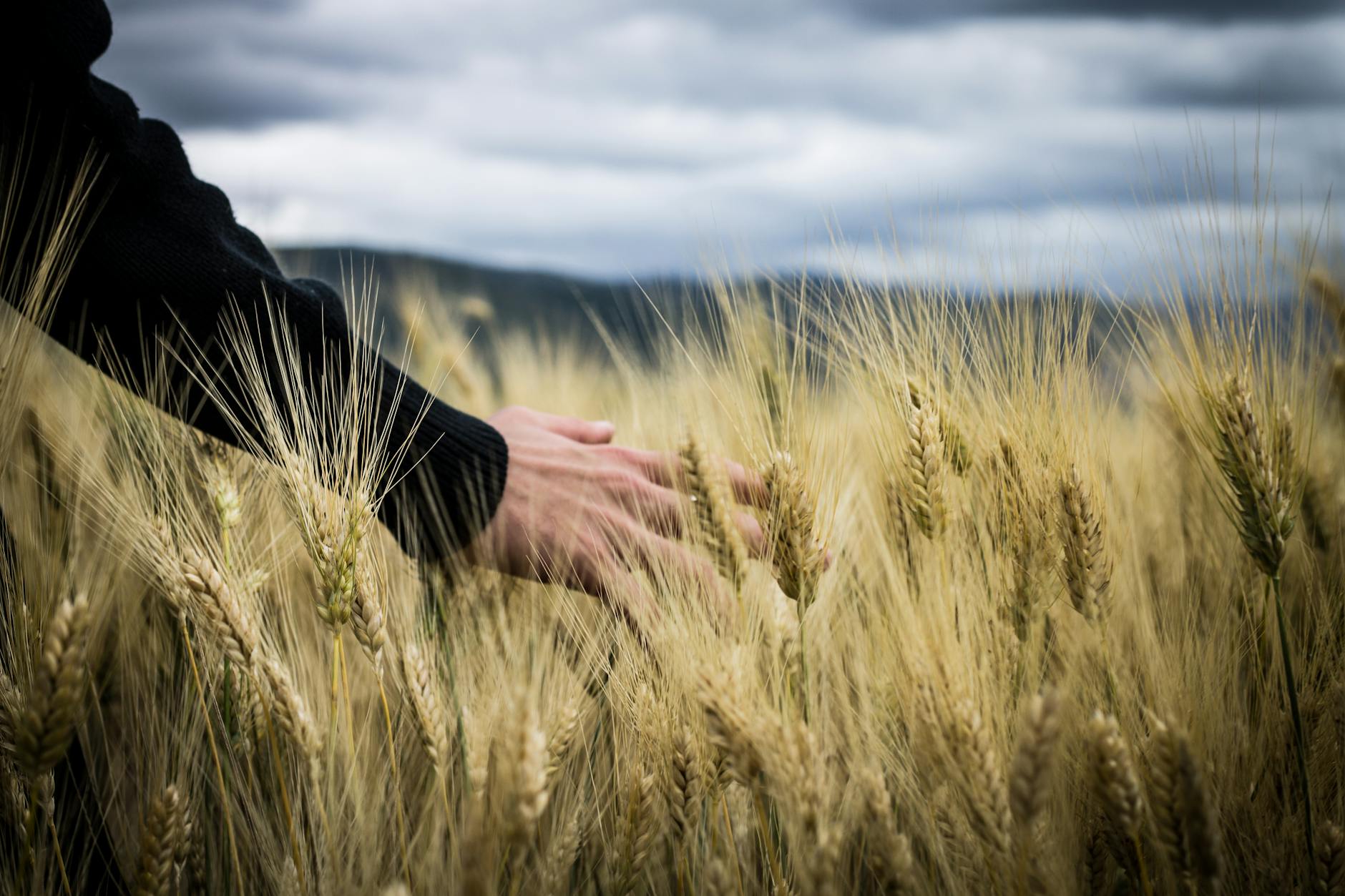
At the time that Naomi and Ruth returned to Bethlehem, it was the beginning of time to harvest the first food crop, barley. The Law recorded God’s commandment to land owners to leave portions of harvest fields for the poor to glean (Leviticus 23: 22)(Deut. 24: 19-22).
Upon Ruth’s return to Bethlehem, she gleaned in the field of Boaz because it was near.
Ruth was attractive and caught Boaz’s eye, and he had his workers leave extra barley for her with orders for the workers not to touch her. Naomi picked up on this and investigated. She found out that Boaz was Naomi’s next of kin and could marry Ruth.
Through the process of kinsman redeemer, Boaz bought the rights to marry Ruth. Boaz gave his sandal to the kinsman in the company of ten elders as witnesses. Boaz married Ruth and she had a son named Obed who had a son named Jesse. Jesse had eight sons of which the youngest was David, the ruddy, handsome shepherd boy (1 Sam. 16: 1-13).
“Anoint him”, saith the Lord to Samuel the Prophet. When David became grown, he proved from his heart who God said David would become; a man after His own heart and be declared Israel’s second and greatest King. David was by no means perfect; just redeemed.
David’s life was and still is like an open book ranging from his shepherding days caring for Jesse’s sheep on the hills of Bethlehem to his being crowned, his 40 year reign as King of Israel, and his passing as noted in 1 Kings 2:10. I earnestly look forward to seeing my Lord, my father, and David when this life is over.
The Value of Barley
Barley was the earliest food source in the spring with harvest beginning in late March to April. Barley was known as the “first fruits offering” at the Feast of Unleavened Bread. It was cut by hand with a sickle and left in the fields to dry. When dried, the stalks would be collected in bundles called sheaves, tied together, and taken to a communal threshing operation, usually located upon a hill. Here, at the threshing operation, oxen were tied to heavy, sharp-wooden boards to drag across the stalks and separate the grain from the stalk. Other workers would use winnowing forks to throw the mixture high into the air and let the wind separate the grain from the lighter chaff.
Barley was used to make a “poor man’s bread” baked into fritters or cakes. It was rich in vitamins A, C, E, K, and B-12 besides being a good source of fiber. The crop of barley was an important food source for survival for many, especially the poor.
 Sower's Field by L. Michael Schoonover